
A Resource Meant to Be Shared: Elon Sooknanan on Mentoring in WASH
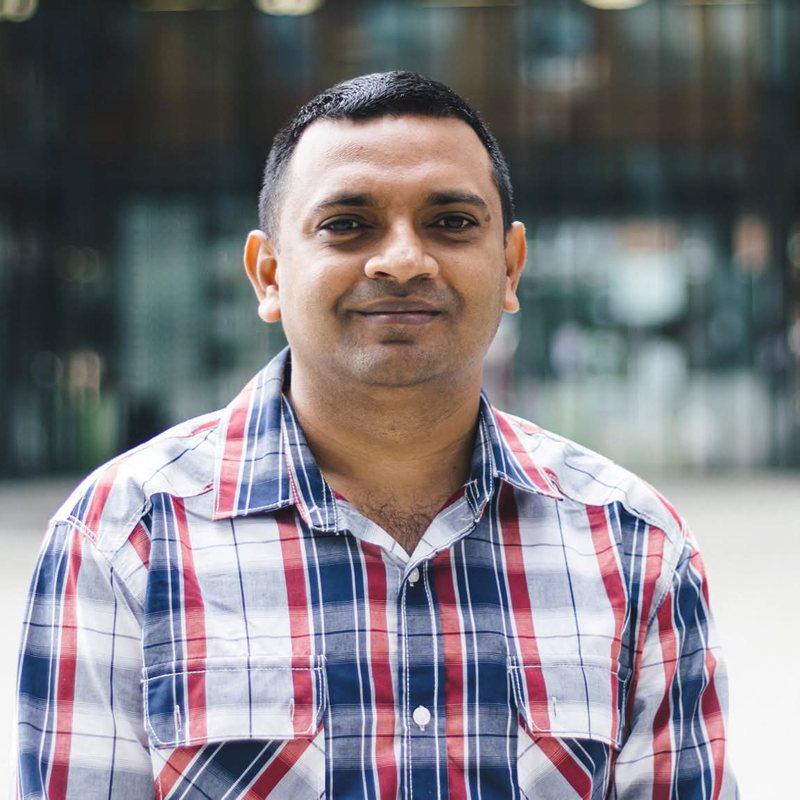
Elon Sooknanan
Head of Department, Guyana Environmental Protection Agency · Guyana
Mentor · WIW & RWSN · 24 October 2026
“Many times, my first instinct was to simply give a mentee the final ‘correct’ answer. However, I’ve come to truly understand that real professional growth happens not by simply stating facts, but by cleverly asking insightful and thought-provoking questions.”
Elon Ryan Sooknanan is based in Guyana. He works as Head of the Department of Public Infrastructure, Transportation and Tourism at the Guyana Environmental Protection Agency, and serves as Chairman of the Council for Technical Vocational Education and Training at the Ministry of Education. He also lectures part-time at the University of Guyana and the Government Technical Institute, and mentors international students from the University of Leeds alongside mentees from RWSN.
Elon takes part in the Women in WASH & RWSN mentorship programme as a mentor.
A Sense of Duty That Grew Stronger Over Time
Elon describes his desire to mentor as something that had been present throughout his career, though it sharpened after a specific turning point. “My desire to be a mentor was always present, a quiet feeling throughout my career. I always felt a strong duty to guide the next generation of WASH professionals.” He points to his postgraduate studies at the University of Leeds as the moment that changed his perspective. “That experience completely changed my view; it showed me the huge size of the global WASH community, the new ideas being created, and how important it was to link what we learn to the real-world work of WASH.”
That shift led him to see his own knowledge differently. “I understood that the knowledge and connections I had gained weren’t just for my own career progress; they were a resource meant to be shared.”
Watching Guidance Ripple Outward
What Elon finds most satisfying is seeing the reach of that guidance in his mentees’ own words. He points to Esther Lydia Akol in Uganda, who described mentoring as having a “ripple effect that strengthens communities, builds leadership, and fuels lasting change.” He also references Gloria Musopole in Malawi, who spoke of gaining the “confidence to face challenges and opportunities directly with belief and purpose,” and Edwin Kiprotich Kiplagat in Kenya, who said he found “not only a mentor but a friend.”
For Elon, that personal connection is central to why the work matters. “Career development is vital, but the personal connection, reaching across different places and backgrounds to support someone’s journey, is deeply satisfying.” He adds that the relationship benefits him too, pointing to Mayte Molina in Nicaragua, who valued the chance to “connect and learn from specialists around the world.”
“I learn just as much from their varied views and problems as they do from my experience.”
A Specific Moment: Watching Mentees Become Leaders
When asked for a specific moment from his mentorship journey, Elon points to a pattern rather than a single event: the shift from learning to leading. He describes working with Esther Lydia Akol beginning in 2025, when she was a committed water and sanitation worker who had the drive and practical knowledge but needed more self-belief to make her ideas heard. The moment that stood out came when she described their mentorship as a “wave of good that helps communities, grows leaders, and keeps good changes going.” Elon reflects, “It showed that guidance had gone past simple tips and had become a part of who she is as a professional.”
He describes a similar shift with Gloria Musopole, who wanted to improve her skills designing solar-powered water systems in 2024. The turning point came when she wrote that she had “learned to face problems with self-assurance and do tasks with a clear goal.” Elon connects this to a broader pattern he sees across his mentees, including Edwin, who said the mentorship introduced him to a “group of experts from different areas,” and Mayte, who appreciated the chance to “meet and learn from water, sanitation, and health experts globally.”
What Mentoring Has Taught Him
Professionally, Elon says the role has sharpened his thinking. “It requires going back to basic knowledge and original research, carefully re-examining your own long-held ideas, and clearly and precisely explaining your reasoning.”
Personally, he describes learning to slow down. “Many times, my first instinct was to simply give a mentee the final ‘correct’ answer. However, I’ve come to truly understand that real professional growth happens not by simply stating facts, but by cleverly asking insightful and thought-provoking questions.”
His Advice to First-Time Mentors
Elon pushes back on the idea that mentoring requires decades of experience. “Should you possess even a moderate degree of professional background, perhaps five years of active engagement, you already command a rich reservoir of pertinent knowledge to impart to an individual embarking on their career journey.”
He also encourages honesty over the appearance of having every answer. “It is entirely appropriate to articulate, ‘While I may not possess the definitive answer to this specific inquiry at this moment, let us collaboratively explore potential solutions.’” And he notes that mentoring doesn’t require a large time commitment. “A concentrated virtual discussion lasting approximately forty-five minutes once a month… can yield a truly transformative impact for someone feeling adrift or uncertain about their professional trajectory.”
Why He Believes Mentorship Matters
Elon connects mentorship directly to the future of the WASH sector. “We spend a lot of money on advanced technology like pump systems, complex pipe networks, and modern treatment plants. But this physical infrastructure will only work well and last if the skilled people responsible for planning, managing, and maintaining them are good at their jobs.”
He points to burnout and isolation as reasons promising professionals leave the field, and frames mentorship as a countermeasure. “Mentorship is the main way we pass on valuable knowledge, experience and skills, often not written down, that people gain from years of direct experience.”
He closes with a broader reflection on what mentorship represents. “At its heart, mentorship sends a strong message, clearly saying: ‘I have strong belief in your natural ability, I deeply believe in how important this work is, and I am absolutely convinced that creating a fairer and lasting WASH future is not just a dream, but something we can truly achieve.’”
What He Recommends
When asked for a book, tool or resource recommendation, Elon points to several organisations and platforms central to the WASH field: the Global WASH Cluster, the Sustainable Sanitation Alliance, the Joint Monitoring Programme, the IRC WASH Systems Academy, and the Sanitation Triangle.
