
Perspective: Maram Obeidat on Mentoring Through Humanitarian WASH Work
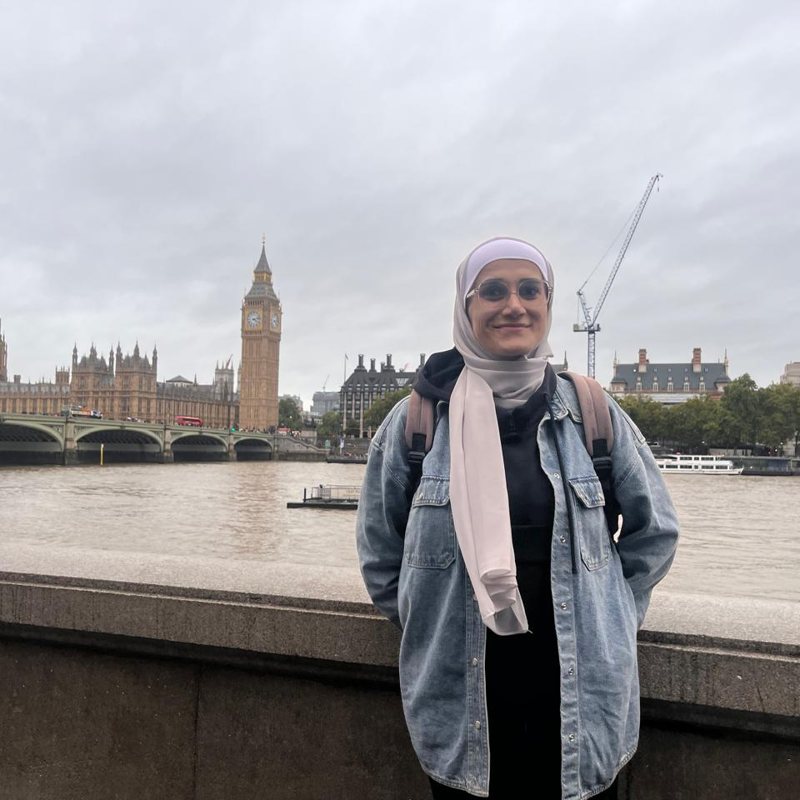
Maram Obeidat
WASH Specialist in Emergencies, Plan International · Jordan
Mentoring pair · WIW & RWSN · 24 October 2026
“I became a mentor because throughout my own career I have seen how valuable it is to have someone who listens, challenges your thinking and helps you see possibilities that you may not yet see yourself.”
Maram Obeidat is based in Amman, Jordan, where she works as a WASH Specialist in Emergencies with Plan International’s Global Humanitarian Team. Her work focuses on supporting WASH programming in humanitarian crises, including emergency response, technical quality, and capacity strengthening, working with country teams to develop practical, context-appropriate solutions. She holds a BSc in civil engineering, a diploma in environmental public health, and an MSc in public health management in emergencies.
Maram takes part in the Women in WASH & RWSN mentorship programme as both a mentor and a mentee.
As a Mentor: Helping Others See Possibilities They Hadn’t Noticed
Maram’s motivation to mentor grew out of what she experienced herself throughout her career. “I became a mentor because throughout my own career I have seen how valuable it is to have someone who listens, challenges your thinking and helps you see possibilities that you may not yet see yourself.” She credits her own mentor from the previous year, Pauline Egan, as a direct influence on that view.
What she finds most rewarding is watching a shift in how mentees make decisions. “What I find most rewarding is seeing someone become more confident in their abilities and start making decisions based on what they want to achieve rather than what they think they are expected to do.”
Finding Value in Simple Conversations
Maram points to the shift from uncertainty to clarity as the most meaningful part of her mentorship journey. “Sometimes a mentee already has the technical ability and experience but needs someone to help her recognize her strengths, organize her thinking and take the next step.” She frames this as a reminder about what mentoring actually requires. “Mentorship does not always require having all the answers. Sometimes its greatest value is creating the space for another person to find her own answers.” She notes this insight, too, traces back to her experience with Pauline Egan.
How Mentoring Has Shaped Her
Maram describes mentoring as reshaping how she listens. “Mentoring has made me a better listener. In technical and humanitarian roles, we are often expected to identify problems quickly and propose solutions. Mentorship requires something different: listening first, asking the right questions and understanding what the other person actually wants.”
Her Advice to First-Time Mentors
Maram encourages new mentors to trust the value of their own path, imperfect as it may be. “You do not need to know everything, and you do not need to have the perfect career before you can mentor someone. Your experiences, including the challenges, mistakes and lessons you have learned, can be extremely valuable to another person.” She adds a note on what the role actually involves. “Your role is not to create someone else’s path for them but to help them navigate their own.”
Why She Believes Mentorship Matters
Maram connects mentorship to how quickly knowledge can move between people. “Mentorship helps make professional knowledge more accessible. It connects people across countries, organisations, disciplines and career stages and allows lessons that may have taken years to learn to be shared much more quickly.” She adds a note specific to her field. “For women in WASH especially, I think mentorship can also strengthen professional networks, confidence and visibility in a sector where women are still underrepresented in many technical and leadership positions.”
As a Mentee: Thinking Strategically Beyond Technical Experience
Maram sought her own mentor at a point when she wanted to look past technical skill toward broader career strategy. “I decided to seek out a mentor because I was at a stage in my career where I wanted to look beyond technical experience and think more strategically about my professional development.”
A Breakthrough in Positioning Herself
The clearest insight from the relationship reframed what professional growth meant to her. “One of the biggest insights for me was recognizing that professional growth is not always about gaining another technical skill. Sometimes it is about becoming more confident in the experience you already have, understanding how to position yourself, and being more intentional about the opportunities you pursue.”
What Having a Mentor Has Given Her
Maram describes the relationship as a space to step back from daily urgency. “Having a mentor gave me a space to step outside the urgency of day-to-day work and reflect on the bigger picture. It helped me challenge some of my assumptions, look at situations from different perspectives, and become more deliberate in my professional decisions.”
Her Advice to Anyone Considering Becoming a Mentee
Maram frames the value of mentorship as dependent on what the mentee brings to it. “Be open, be honest about what you want to learn, and take responsibility for the process. A mentor can offer perspective, experience and guidance, but the value of mentorship also depends on what you bring to the relationship. Come with questions, be willing to be challenged, and most importantly, act on what you learn.”
When asked what mentorship has meant to her, Maram chose a single word. “Perspective, having someone help you see your experience, challenges and possibilities from a different angle.”
What She Recommends
When asked for a book, tool or resource recommendation, Maram points to a foundational reference in humanitarian work. “One resource I consistently recommend is the Sphere Handbook. It is more than a set of technical standards; it helps us think about quality, dignity, protection and accountability when designing humanitarian WASH responses.” She adds that technical guidance alone isn’t enough. “I also think it is important for WASH professionals to complement technical guidance with resources on leadership, inclusion and community engagement.”
