
Shortening the Distance Between Potential and Opportunity: Meltus Mugomi on Mentoring in Urban Sanitation

Meltus Mugomi
WASH and climate resilience professional · Kenya
Mentor · WIW & RWSN · 24 October 2026
“You do not need to have all the answers to be a good mentor. Bring your experience, curiosity and willingness to listen. Be honest about what you know and what you do not know, ask good questions, and create a safe space where your mentee can think openly.”
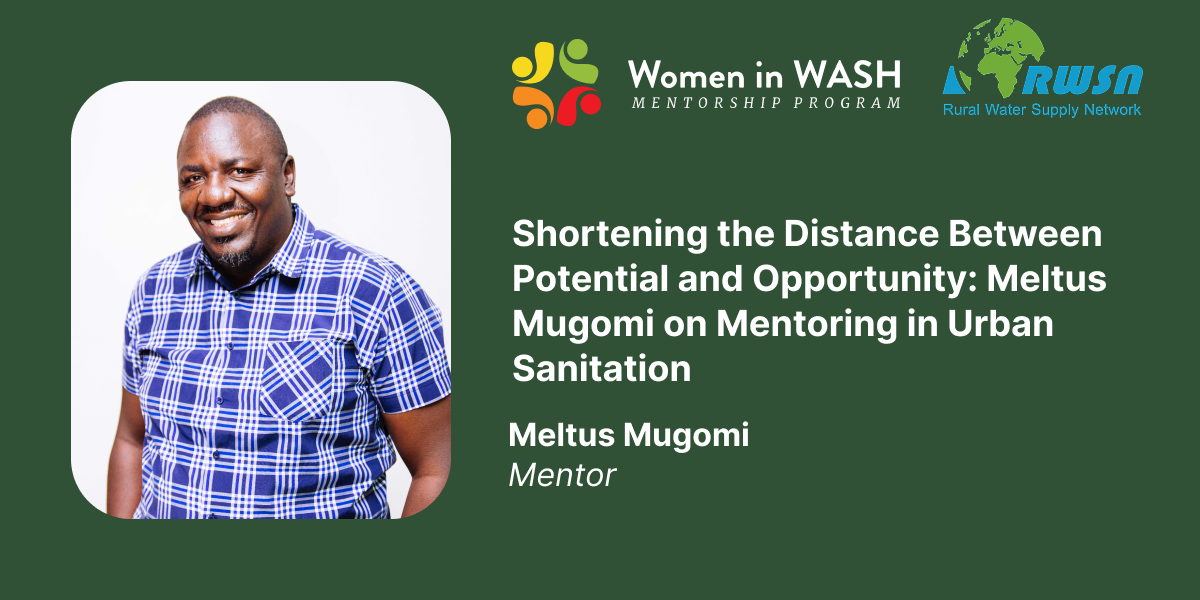
Meltus Mugomi is based in Nairobi, Kenya, and works across East and Southern Africa, with a significant part of his work focused on Zambia. He is a WASH and climate resilience professional with experience at the intersection of urban sanitation, utilities, government, development partners, and the private sector.
He currently serves as Country Director for Fresh Life Sanitation Services’ Zambia operations, supporting the scale-up of inclusive sanitation solutions and partnerships.
Meltus takes part in the Women in WASH & RWSN mentorship programme as a mentor.
Paying Forward What Shaped His Own Career
Meltus traces his decision to mentor back to the people who shaped his own professional growth. “Much of my own professional growth has been shaped by people who shared their experience, challenged my thinking and created opportunities for me. Mentorship is one way of paying that forward.”
What he finds most rewarding is watching a mentee gain clarity. “What I find most rewarding is seeing someone gain confidence, discover their own strengths and begin making decisions from a clearer sense of purpose.”
From Discussing Challenges to Taking Ownership
Meltus points to a specific pattern he has seen repeat across his mentoring relationships: conversations shifting from simply discussing career challenges to a mentee confidently identifying what they want. “Those moments remind me that good mentorship is not about providing all the answers; it is about asking the right questions and helping someone recognise that they often already have more capacity than they realise.”
How Mentoring Has Shaped Him
Meltus describes mentoring as reshaping his instincts as a leader. “Mentoring has made me a better listener and a more intentional leader. It has taught me to resist the temptation to immediately offer solutions and instead listen carefully, ask thoughtful questions and understand the person behind the challenge.” He connects that directly to his view of leadership more broadly. “Leadership is not only about delivering results; it is also about creating space for others to grow.”
His Advice to First-Time Mentors
Meltus encourages new mentors to trust what they already bring to the relationship. “You do not need to have all the answers to be a good mentor. Bring your experience, curiosity and willingness to listen. Be honest about what you know and what you do not know, ask good questions, and create a safe space where your mentee can think openly.”
Why He Believes Mentorship Matters
Meltus connects mentorship to the pace at which the WASH sector needs to grow its talent. “Mentorship shortens the distance between potential and opportunity. In sectors such as WASH, where solving complex challenges requires both technical expertise and strong leadership, we need to intentionally develop the next generation of professionals.” He frames the broader impact plainly. “When we invest in people, we strengthen the sector itself.”
What He Recommends
When asked for a book, tool or resource recommendation, Meltus points to the Shit Flow Diagram as a practical tool for anyone working in urban sanitation. “It helps us move beyond infrastructure alone and understand what actually happens to sanitation waste across the entire service chain, from containment and emptying to transport, treatment and safe disposal or reuse.”
He adds that it has practical value beyond analysis. “I have found it particularly valuable for bringing utilities, governments and other stakeholders around the same evidence and identifying where interventions can have the greatest impact.”
