
The 8-8-8 Rule: Neema Mbwambo on What Her Mentor Taught Her About Rest

Neema Mbwambo
Project Coordinator, Strong Women Strong World · Tanzania
Mentee · WIW & RWSN · 24 October 2026
“My mentor helped me see that growth often begins when we stop waiting for permission and start believing in our own potential.”
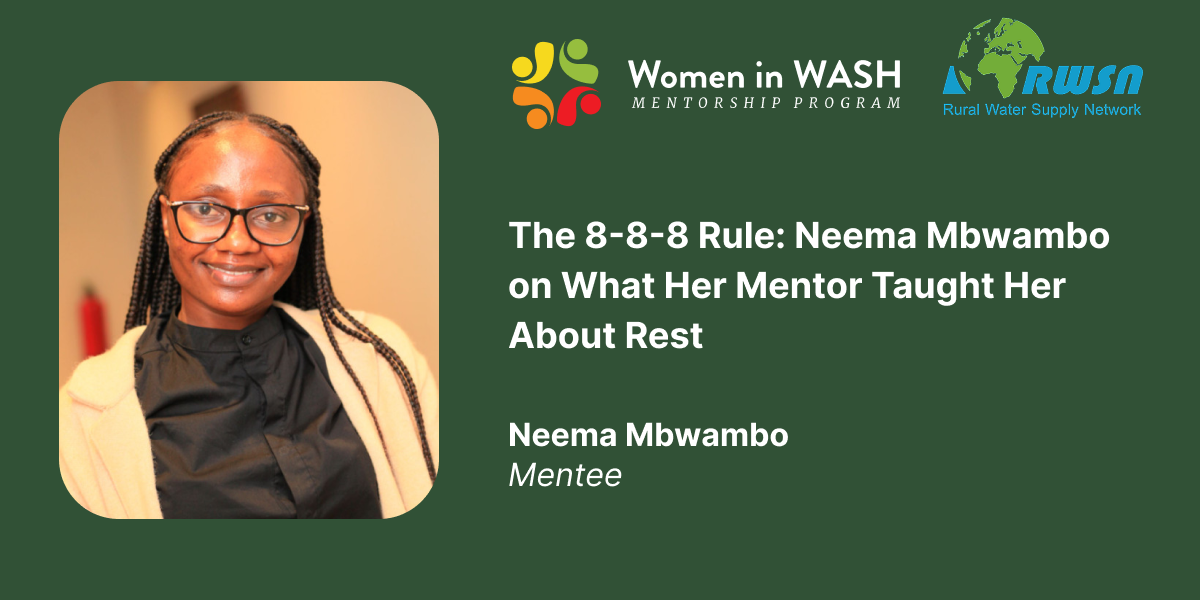
Neema Mbwambo is based in Tanzania, where she works for an NGO as a Project Coordinator with the Strong Women Strong World project, supporting community development initiatives focused on women’s empowerment, child wellbeing, and sustainable development.
Neema joined the Women in WASH & RWSN mentorship programme as a mentee.
Wanting a Cheerleader as Much as a Guide
Neema’s reasons for joining went beyond technical growth. “I was also looking for someone who could be a cheerleader in my journey, someone who would encourage me, challenge me and hold me accountable to the goals and commitments I set for myself.”
She was also motivated by her own workplace, where interns and volunteers often lack structured mentorship. “My hope is to use the knowledge, skills, and experience gained from this program to support and inspire young people as they begin their own professional journeys. For me, mentorship is about creating a ripple effect.”
A Mentor Who Made Her Growth Feel Personal
What made the relationship feel different to Neema was how invested her mentor became. “It feels as though my success is their personal mission. They celebrate my progress, encourage me when I doubt myself and challenge me to aim higher than I thought possible.” She was especially struck by how consistently her mentor showed up despite a demanding schedule. “Despite their demanding schedule, frequent travel and many professional responsibilities, they always made time for me. Knowing that someone so accomplished was willing to dedicate their time and energy to my growth meant more than words can express.”
Learning the 8-8-8 Rule
One of the clearest shifts for Neema came from gaining the confidence to speak up and take initiative. “My mentor helped me see that growth often begins when we stop waiting for permission and start believing in our own potential.”
But the moment that had the deepest impact came when her mentor announced plans to take two weeks completely off, disconnecting from technology to rest. “At first, I found it surprising. Like many development professionals, I was used to believing that there was always more work to do and that taking time away somehow meant falling behind.” That conversation led to a broader discussion about balance. Her mentor introduced her to the 8-8-8 rule: eight hours for work, eight hours for rest, and eight hours for personal life and wellbeing. “I realized that constantly working and neglecting myself was not dedication, it was poor time management and it was limiting my personal growth.”
Since then, Neema has made deliberate space for herself, including exercise, volunteering with another organisation, and travel. She also practiced something that didn’t come naturally before. “I learned that it is okay to say ‘no.’ We even practiced how to decline requests professionally and respectfully. That simple skill has given me back so much time and energy.”
What Stood Out About Her Mentor
Neema points to her mentor’s honesty as much as their expertise. “It would have been easy for them to present only the highlights of their career, but instead they chose to be authentic and vulnerable. Hearing about both the positive and difficult moments in their journey made their experiences relatable and gave me valuable insights that no textbook or training could provide.” She also highlights their generosity with resources and connections. “They were never protective of their knowledge, time, resources or network.”
Rethinking What Mentorship Is
Neema initially expected to be the one constantly receiving guidance. Instead, she found the relationship ran in both directions. “I came to appreciate that even the questions I asked sometimes encouraged my mentor to reflect on her own experiences, lessons and professional journey. There were moments when we explored new topics together, exchanged ideas and learned side by side.”
She now sees the impact as extending well beyond the two of them. “When one person grows, the impact reaches much further. I truly believe that becoming a better version of myself benefits not only me, but also my colleagues, my family, the young people I work with and the communities I serve.”
Her Message to Anyone Considering the Programme
Neema’s advice centers on openness and trust in the process. “Come with an open mind, curiosity and a willingness to learn. Be honest about your goals, embrace the conversations and trust the process.” She frames the investment as one that extends beyond the individual. “The growth, confidence and knowledge you gain will ripple outward to your colleagues, your community and the people you will one day mentor yourself.”
What She Recommends
When asked for a book, tool or resource recommendation, Neema points to both technical and leadership-focused sources. For technical development, she recommends the WHO Guidelines on Sanitation and Health and resources from SuSanA, the Sustainable Sanitation Alliance. For personal growth, she points to two books that shaped her thinking on confidence and leadership: The Confidence Myth by Ginka Toegel and Act Like a Leader, Think Like a Leader by Herminia Ibarra.
