
Reflection: Swati Agnihotri on Pausing to Look at Her Own Career
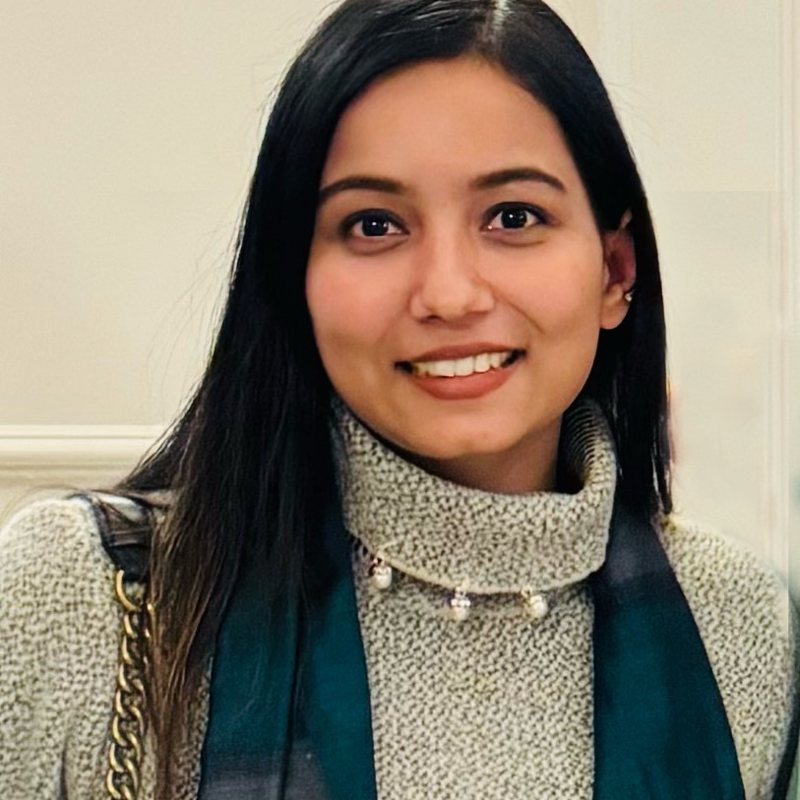
Swati Agnihotri
Project Manager, World Vision USA · India
Mentoring pair · WIW & RWSN · 24 October 2026
“A mentor doesn’t always need to provide a solution or tell someone what they should do. Sometimes, asking the right questions and giving someone the space to reflect can help them see their own strengths and possibilities much more clearly.”
Swati Agnihotri is based in Lucknow, India. She has around nine years of experience in WASH and currently works with World Vision USA as a Project Manager for safe drinking water programming across multiple countries in Asia, Africa, and Central America. Her background spans multi-country WASH programme management, school WASH, government-led sanitation initiatives, and research and evidence generation in collaboration with global academic institutions. She has worked across programme planning, implementation, data and learning, and partnerships with government and other stakeholders.
Swati takes part in the Women in WASH & RWSN mentorship programme as both a mentor and a mentee.
As a Mentor: A Natural Fit for Someone Who Enjoys Connection
Swati describes mentoring as an extension of something already true about her. “I am quite a social person and I genuinely enjoy meeting people, building meaningful connections and learning from each other. So when I saw the opportunity to become a mentor, it felt like a natural fit for something I already enjoy doing.” She also traces her motivation to guidance she received earlier in her own career, sometimes formal, sometimes just an honest conversation. “I wanted to be able to offer that to someone else as well.”
What she finds most rewarding is that the relationship doesn’t run in only one direction. “My mentees and I come from different backgrounds and have different experiences, so while I share what I have learned, I also learn from their perspectives and questions. For me, that exchange is probably the most valuable part of mentorship.”
Small Conversations, Real Impact
Swati recalls watching a mentee gradually recognise her own strengths and professional identity through a series of ordinary conversations. “There wasn’t one big ‘breakthrough’ moment, it was more about those small realisations that happen during a conversation.” She draws a broader lesson from that experience. “A mentor doesn’t always need to provide a solution or tell someone what they should do. Sometimes, asking the right questions and giving someone the space to reflect can help them see their own strengths and possibilities much more clearly.”
How Mentoring Has Shaped Her
Swati says mentoring pushed her to reflect on her own career more than she expected. “When someone asks you why you made a particular career decision or how you dealt with a challenge, you have to think about your own experiences rather than just moving on to the next task.” It also changed how she offers advice. “Mentoring has reminded me that my experience is only one perspective, and what worked for me may not necessarily be the right approach for someone else. That has made me a better listener.”
Her Advice to First-Time Mentors
This was Swati’s first time mentoring professionally, and her advice reflects that starting point. “Don’t underestimate the value of your own experiences. You don’t have to be at a particular stage in your career or have all the answers to be able to support someone.” She admits her expectations shifted once she began. “Before starting, I thought being a mentor might feel like a difficult responsibility and that I would need to constantly have something valuable to offer. But it has turned out to be quite the opposite.”
Why She Believes Mentorship Matters
Swati points to the value of an outside perspective, even in a collaborative field. “Having someone outside your immediate work environment to talk to can give you a different perspective. And I think the value goes both ways. A mentor shares experience, but a mentee also brings new ideas, questions and perspectives. That two-way learning is what makes mentorship meaningful to me.”
As a Mentee: Looking for an Outside View on Her Own Career
Even with years of experience, Swati still had open questions about her direction. “I wanted a mentor who could give me an outside perspective on my career, particularly around the areas I want to develop further and the direction I want to take in the longer term. I wasn’t looking for someone to give me a fixed career plan.”
A Breakthrough: Finally Writing the Plan She’d Put Off
Through the mentorship, Swati made time for something she had wanted to do for years: a professional development plan spanning the next 10 to 15 years of her career. “We looked at where I am today, where I would like to go, what skills and experiences I need to build, and what I should be focusing on at different stages.” She describes what that plan means to her now. “It is not a rigid plan that I have to follow exactly, but it gives me a direction and a framework to come back to whenever I am faced with a career decision.”
What Having a Mentor Has Given Her
Swati points to the space the relationship created as much as any specific advice. “Having a mentor gave me a reason to actually pause and work through these things rather than just thinking about them.” She also values the outside vantage point it offered. “Sometimes we become so used to our own work that we don’t recognise the strengths we have developed or the possibilities that are already there.”
Her Advice to Anyone Considering Becoming a Mentee
Swati encourages people not to wait for a specific problem before seeking guidance. “Don’t wait until you have a very specific problem to look for a mentor. You can start simply by wanting to learn from someone else’s experience.” She adds that the relationship requires effort from both sides. “A mentor can open a door or give you a different perspective, but you still have to walk through the door yourself.”
When asked what mentorship has meant to her in a word, she chooses “Reflection. This mentorship created the right space for me to pause, look at my journey and think about what I want to build next.”
What She Recommends
When asked for a book, tool or resource recommendation, Swati points to a combination of technical sources and professional networking. She regularly uses guidance from WHO, UNICEF, UN-Water, and the WHO/UNICEF Joint Monitoring Programme, particularly for country-level WASH data and global trends. She also points to LinkedIn as a resource in its own right. “I try to stay active there, follow people and organisations working in WASH, share relevant work and engage with discussions.”
For Swati, it’s the combination that matters most. “A combination of good technical resources and an active professional network is what really helps with continuous learning in WASH.”
